ENGLISH

Marble Cutting: how it is done today at an industrial level

logo
Giada Rota
12 May 2026

Industrial marble cutting is a complex and highly specialized process that requires the use of advanced machinery to ensure precision and efficiency. In this article, we will explore the marble cutting process, the importance of using advanced industrial machinery, and the solutions offered by Pedrini in the sector.

How are marble blocks cut?


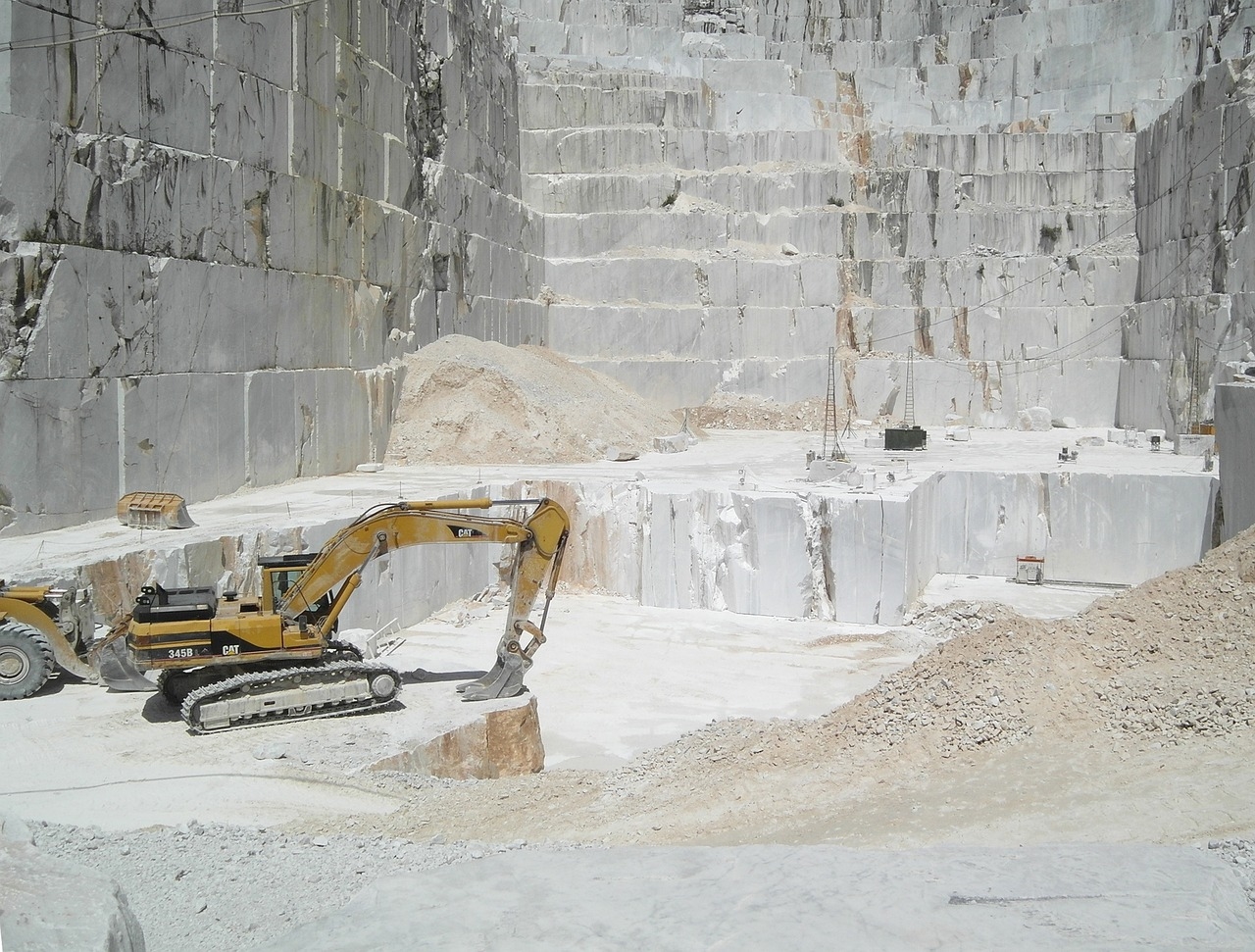
Cutting marble blocks is the first crucial stage in transforming raw material into slabs ready for finishing. Although each plant and quarry may have its own variations, the typical process follows this sequence:


1. Transporting and positioning the raw block


Once the block has been extracted from the quarry, it is transported to the processing facility where it is loaded onto the cutting machine using cranes or automated handling systems. During the loading phase, it is essential to check the planarity of the support surface, the stability of the block, and its correct orientation in relation to the marble veining, in order to optimize yield and minimize waste.


Rely on the expertise of Pedrini for cutting marble into perfect slabs.


CONTACT US


2. Choosing the cutting technology


At this stage, the most suitable technology is selected according to the size of the block, the type of marble, the desired slab thickness, and the required production capacity. The main solutions are:


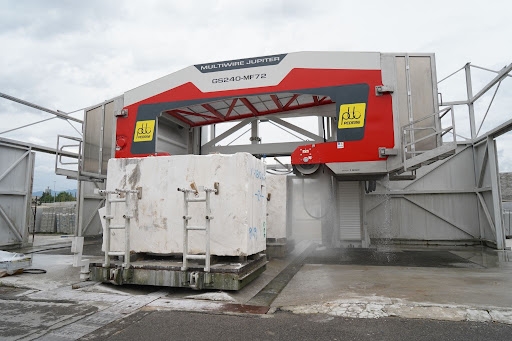
  • Diamond wire (singlewire or multiwire)                Diamond wire machines are among the most widely used technologies for industrial marble block cutting. In the singlewire model, a single tensioned diamond wire (or two wires) cuts the block vertically. In multiwire systems, dozens of parallel wires simultaneously cut multiple slabs from the same block. The wire usually has a diameter of 4.3 mm, 5.3 mm, or 6.3 mm and it is continuously cooled and lubricated by a stream of water, which removes debris and prevents overheating. The main advantage of this technology is the high yield of thin slabs with excellent flatness and surface finish.

  • Diamond blade/disc gang saws (multi-blade or block cutters)                                                                              As an alternative — or in combination with wire technology — vertical disc saws and multi-blade gang saws are also used. These systems employ a set of diamond discs for parallel cutting or single blades. They are ideal for very large blocks, squaring cuts, or when the slab thickness does not need to be ultra-thin.


3. Cutting setup and start-up


Once the machine and cutting technology have been selected, the cutting parameters are configured: number of wires (or discs), pitch (distance between the wires), wire diameter, desired slab thickness, feed speed (downfeed movement), wire peripheral speed, tensioning system, and cooling setup. During the cutting process, water is essential to cool the tool, remove marble dust, and maintain cutting quality.


4. Cutting execution


  • In the case of multiwire systems: the block is secured in place while the machine moves downward vertically (feed movement) as the diamond wires run continuously, simultaneously cutting multiple slabs. The number of slabs produced depends on the number of wires and the selected slab thickness. The result is a block cut into slabs ready for the finishing process.

5. Slab removal and quality control


The cut slabs are then moved to the unloading area, where they undergo quality control checks. At this stage, operators inspect the slab dimensions, flatness, and the presence of any defects.


6. Optimizing yield and reducing waste


One of the key operational factors for an industrial stone processing plant is block yield: the more slabs that can be obtained while minimizing material waste, the better the production times and costs. Modern multiwire technologies make it possible to move from very limited productivity levels to dozens of square meters per hour. In addition, cutting precision reduces the need for subsequent calibration and polishing operations, lowering both costs and processing time.


Pedrini marble block cutting machines


Pedrini offers cutting-edge solutions for marble block cutting. Our machines are designed to maximize efficiency and quality, ensuring excellent results at every stage of the processing cycle. With a product range that includes diamond wire marble cutting machines as well as polishing machines, Pedrini is the ideal solution for companies looking to improve their natural stone processing operations.


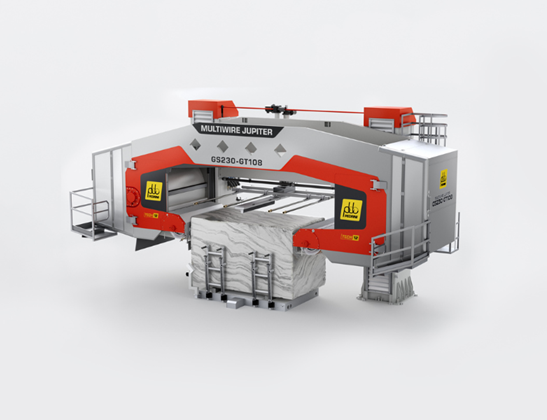
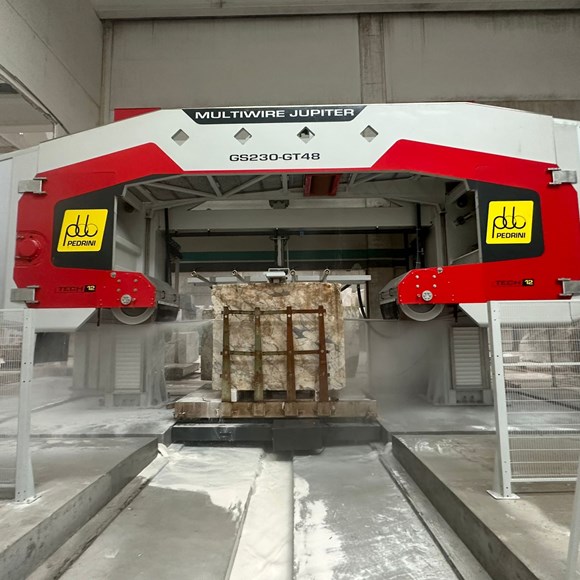
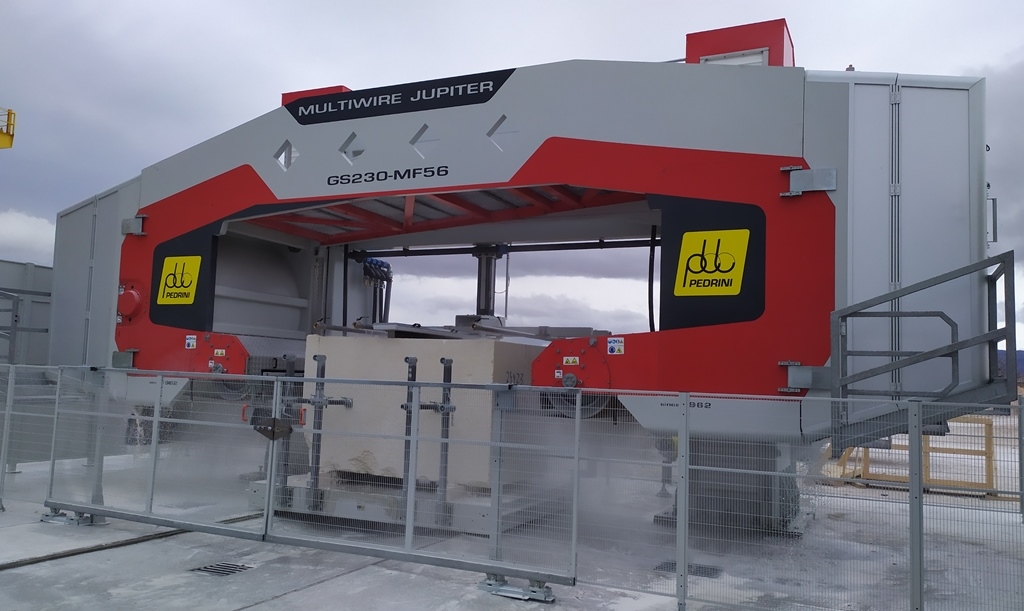
Multiwire Jupiter GS230 TECH12


The MULTIWIRE JUPITER TECH12 is a multiwire machine designed for cutting marble blocks, specifically developed for the production of thin slabs with a thickness of 12 mm.


Main Features:


  • 5.3 mm diamond wires for precise and high-performance cutting
  • Available in configurations with 48, 60, 72, and 108 wires to meet different production requirements
  • High block yield: up to 55.5 m² per cubic meter cut
  • In production since 2019, with proven reliability in the field


Advantages:


  • Higher block yield and reduced material waste
  • Lower transportation costs thanks to the lightweight thin slabs
  • Easier and more cost-effective installation compared to standard-thickness slabs
  • Production flexibility thanks to multiple available configurations


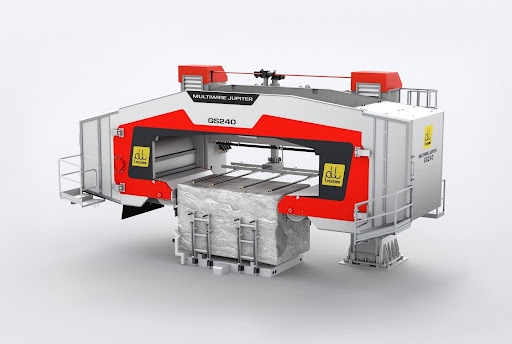
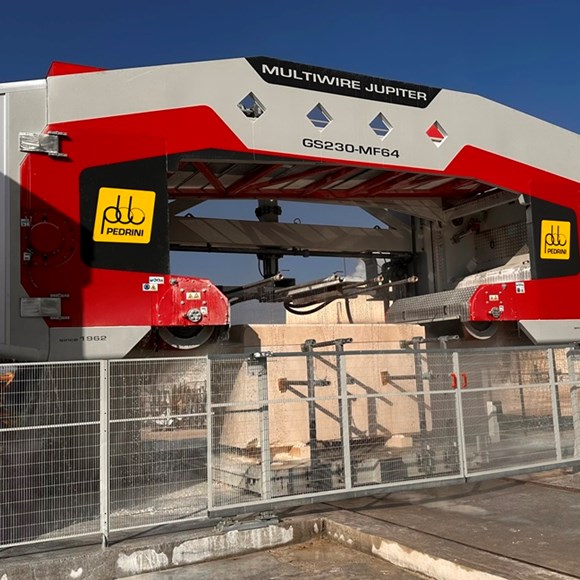
Multiwire Jupiter GS240


The MULTIWIRE JUPITER GS240 by Pedrini represents a significant evolution in natural stone cutting, resulting from extensive research and development. Versatility and precision are the machine’s core strengths: it delivers excellent performance on quartzites, marbles, granites, and even challenging materials such as gneiss and metamorphic schists, which are known for areas of variable hardness that can cause wire deviation.


Distinctive technical features:


  • 4.3 mm wire – optimizes block yield up to 39.2 m²/m³ with 2 cm slabs, maximizing the use of raw material
  • 2.3 m diameter flywheel – ensures smooth and precise wire traction thanks to the wide contact arc with the wires, a key factor for cutting quality
  • Energy efficiency – the technical design has reduced electricity consumption compared to previous solutions
  • Reduced waste – the optimized cutting process lowers material loss, positively impacting both costs and sustainability


The result is a highly reliable and innovative machine capable of delivering outstanding performance across a wide range of natural stone materials.


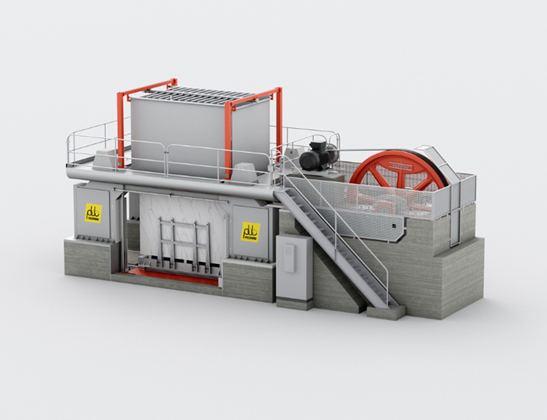
GS131 Gang Saw


The GS131 is a modern gang saw designed for marble cutting using diamond segment blades. It features a fixed-height blade holder and an ascending block-carrying platform. Equipped with 80 blades, it ensures high-frequency, high-precision cutting even at maximum feed speeds. The unique “pendulum” system guarantees smooth, friction-free movement. Its robust mechanical components provide exceptional quality and long-term reliability.


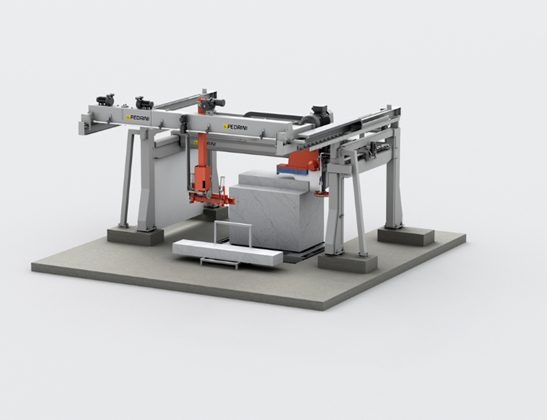
M586 Block Cutter


The M586 block cutter is a 4-column machine ideal for cutting marble blocks. Featuring vertical discs (from 1300 to 1700 mm) and a horizontal disc, it delivers precise cuts while the block remains stationary. Its open structure facilitates the integration of automatic loading and unloading systems. Equipped with motors up to 220 HP, the M586 ensures maximum cutting speed, optimizing the production of strips and semi-finished products.


Diamond wire diameter: why it makes a difference


In natural stone cutting, the diameter of the diamond wire is not just a minor technical detail: it is one of the variables that most directly affects block yield, cutting quality, and production costs.


Less material removed, more slabs produced


Every cut generates “material waste,” meaning the amount of material transformed into dust and process water. A smaller-diameter wire produces a thinner cut, reducing material waste with every pass. The direct result is a greater number of slabs obtained from the same block.


Diameter selection depends on the material


The diameter of the diamond bead is selected according to the mix of materials being cut, and the same principle applies to the pitch of the wire-guide grooves, which is calibrated to maximize block yield based on the wire diameter used. There is no universal solution: marbles, granites, quartzites, gneiss and schists all require different configurations to ensure precision and tool durability.


Lower energy consumption


A thinner wire encounters less resistance during cutting, which translates into lower power demand from the machine.


Cutting precision and stability


A high-quality diamond wire guarantees vibration-free operation, low noise levels, and greater cutting precision and speed. These factors become even more critical when processing materials with variable hardness, where an improperly calibrated wire tends to deviate, compromising slab flatness.

 

The operational challenges of industrial marble cutting


Despite technological advances, marble block cutting remains a complex process that requires mechanical precision and constant monitoring of process parameters.


The vibrations generated during sawing can compromise the surface quality of the slabs and cause microfractures. For this reason, modern machines adopt damping systems and reinforced frames. Proper block stabilization is also essential: the block must be perfectly anchored to the base to prevent movement during cutting. The deformation of diamond wires or discs represents another critical challenge. Excessive tension or uneven wear can alter slab thickness and reduce the tool’s service life.


Increasing attention is being given to the management of cutting waste — marble dust and slurry — which are increasingly recovered and filtered in order to reduce environmental impact and improve the sustainability of the entire production process.


The importance of industrial marble cutting machines


Industrial machinery has revolutionized the marble cutting process. Before the introduction of these advanced technologies, marble cutting was a manual, slow, and error-prone operation. With the advent of modern machinery, the industry has experienced significant improvements in terms of:


  • Precision: Modern machines are capable of performing highly accurate cuts, ensuring consistent, high-quality serial production.
  • Speed: Advanced equipment increases production speed without compromising quality.
  • Waste reduction: The use of advanced technologies minimizes material waste, optimizing marble utilization.
  • Safety: Automated machines reduce the risk of workplace accidents, ensuring a safer working environment.


Choose excellence in marble cutting — choose Pedrini.


CONTACT
image-13

Thank you for your message.

Error

Do you need more info?

Feel free to contact us for product information, events, customer care and open jobs.

Attachment
You can attach here a file of type .doc, .pdf, .png, jpg, .jpeg